 Case Studies
 Test Automation Basics
 Types of Tests
 Industries
What is regression testing?
Undesired behavior that was fixed before and now reappears or features that have worked before but are now broken are called “regressions”.
Regression tests are automated tests that determine if one particular change in code or an update leads to such regressions.
Regression testing is responsible for the stability and functionality of existing features. Every alteration in code can lead to defects or malfunctions – even one single line of code can lead to fatal consequences. That’s why a regression test is performed as the final step. This guarantees that the system remains functional after every update.
When to apply regression testing?
Regression testing is typically applied for the following alterations:
- new features
- new requirements added to existing features
- source code optimization
- patch fixes
- changes in configuration
Why is regression testing necessary?
Small modifications to the software can sometimes have a devastating domino effect on the key functions of the product. Functional testing only inspects new features, but not their compatibility with existing features. This means it is much more difficult and time-consuming to find the root cause of bugs without regression testing.
Regression testing can uncover bugs early in the software distribution process, so companies don’t have to invest high costs and maintenance efforts in fixing built-up bugs.
In other words: if your product is modified frequently, regression tests are a necessary filter to ensure quality while improving the product.
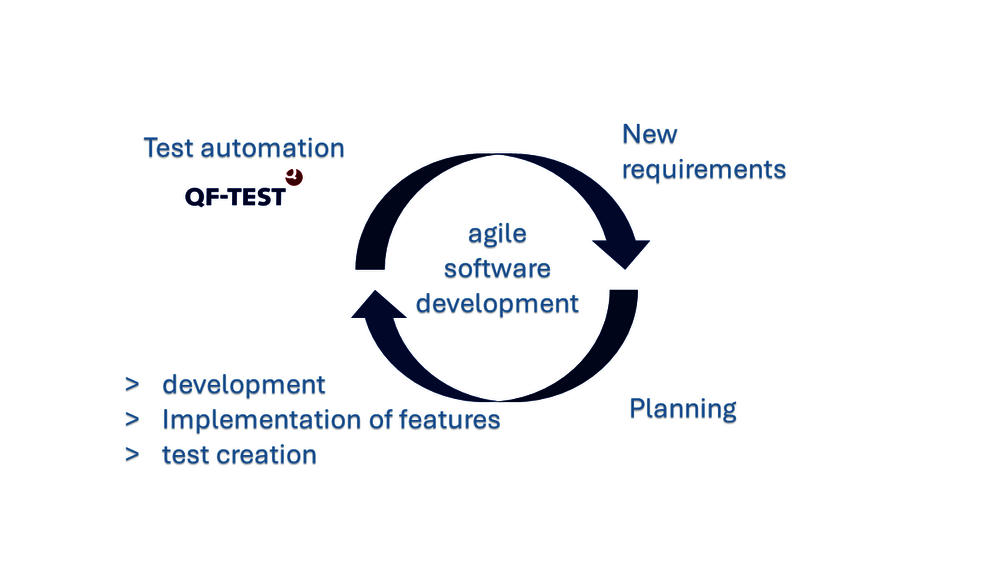
Advantages of regression testing with QF-Test
Regression testing and agility are the core of our “quality first”-philosophy for the best possible quality of your software.
Regression tests are performed in short cycles with regular test repetitions. Through test automation with QF-Test, these can be carried out completely without further personnel and hardware costs.
The quick regression testing process gives developers, testers, and project management instant feedback, allowing them to avoid high follow-up costs and image damage.
QF-Test tests the entire system via the graphical interface and offers easy test creation and stable recognition via graphical components.
Regression tests can be scheduled from the beginning of development; they are low-maintenance and can be operated by developers as well as testers. We also offer high extensibility and customization for your application.
Types of regression tests
- Full regression tests: Testing of the entire system after major changes.
- Selective regression tests: Focus on the changed modules and their dependencies.
- Progressive regression tests: Testing new parts of the system during development.
- Retrospective regression tests: Testing after completion of a project for documentation and error analysis.
To summarize
QF-Test helps you implement and optimize your regression tests so you can focus on what’s important: developing great software. With our solutions, you minimize the risk of setbacks while maximizing your productivity and efficiency.
Get in touch with us
Find out more about our innovative approaches to regression testing and how we can help you take your software quality to the next level. Contact us today and try QF-Test for free.

